How to Move to Colombia from the US: The Complete 2026 Guide for Americans
Written by
Jonathan Moore
Insight
Dec 6, 2024
4 min read
This guide covers everything you need to know to make the move from the US to Colombia — from choosing the right visa to finding an apartment, opening a bank account, and actually settling in.
Is Moving to Colombia from the US a Good Idea?
The short answer is yes — for the right person.
Colombia is not the country it was twenty years ago. Medellín, once infamous, has been named one of the world's most innovative cities. Bogotá has a thriving cultural and professional scene. The infrastructure in major cities is modern, reliable internet is widely available, and the expat community across both cities is large, welcoming, and well-organised.
What makes Colombia particularly compelling for Americans right now is the combination of three things happening simultaneously: the cost of living in the US has become genuinely difficult for many people, Colombia has introduced a dedicated Digital Nomad Visa, and the quality of life in major Colombian cities has never been higher.
A comfortable life in Medellín — good apartment, eating out regularly, gym membership, weekend travel — costs between $1,200 and $2,000 per month for a single person. In most major US cities, that budget would not cover rent alone.
Step 1: Choose the Right Visa
The most important decision you will make before moving to Colombia is choosing the right visa. The wrong choice can create problems down the line, so it is worth getting this right from the start.
Here are the four most common pathways for Americans:
The Digital Nomad Visa (Visa V — Nómada Digital)
Best for: Remote workers, freelancers, and online business owners earning income from clients outside Colombia.
Introduced in October 2022, this visa allows remote workers to live legally in Colombia for up to two years (renewable once for a further two years). The income requirement is three times Colombia's monthly minimum wage — approximately $1,100 USD per month as of 2026.
Requirements include a valid passport, proof of foreign income (bank statements and/or employment letter), an FBI background check with apostille, and an all-risk health insurance policy valid for the duration of the visa. The application is completed online through Colombia's Ministry of Foreign Affairs, and processing typically takes four to eight weeks.
Important note: On this visa you cannot earn income from Colombian employers or Colombian clients. All your income must come from outside Colombia.
The Rentista Visa (Visa M — Rentista)
Best for: People with passive income — investments, rental income, dividends, or any regular income that does not require active employment.
This requires demonstrating a stable monthly income of at least ten times Colombia's minimum monthly wage (approximately $3,600 USD per month as of 2026). It grants a longer-term residency status.
The Pensionado Visa (Visa M — Pensionado)
Best for: Retirees receiving Social Security, a pension, or any guaranteed lifetime income.
This is arguably the most accessible visa for American retirees. The income requirement is three times the Colombian minimum monthly wage — the same threshold as the Digital Nomad Visa, or approximately $1,100 USD per month. For most Americans receiving Social Security, this is easily met.
The Pensionado Visa grants legal residency and is renewable. After five continuous years of legal residency, you can apply for permanent residency.
Tourist Visa (No Visa Required)
Americans can enter Colombia visa-free and stay for up to 90 days, extendable to 180 days per calendar year. Many people use this initial tourist period to explore cities, find a neighbourhood, and prepare their longer-term visa application before committing fully.
Step 2: Choose Where to Live
Colombia's major cities each have a completely different feel. Here is an honest comparison of the most popular options for American expats.
Medellín — The Most Popular Choice
Medellín is consistently the top pick for American expats, and for good reason. The climate is genuinely extraordinary — 72°F year-round, low humidity, and famously known as the City of Eternal Spring. The city has world-class public transport, a thriving coworking scene, and a large, well-established expat community.
Best neighbourhoods for Americans:
El Poblado: The main expat hub. Modern, safe, walkable, full of restaurants and coworking spaces. Rents here are higher — a one-bedroom typically runs $700–$1,100/month furnished.
Laureles: More local feel, quieter, popular with long-term expats who want a more authentic Colombian experience. A one-bedroom runs $500–$800/month.
Envigado: Just south of Poblado, family-friendly, very safe, good local restaurants, lower rents. One-bedrooms from $450–$700/month.
Bogotá — The Capital
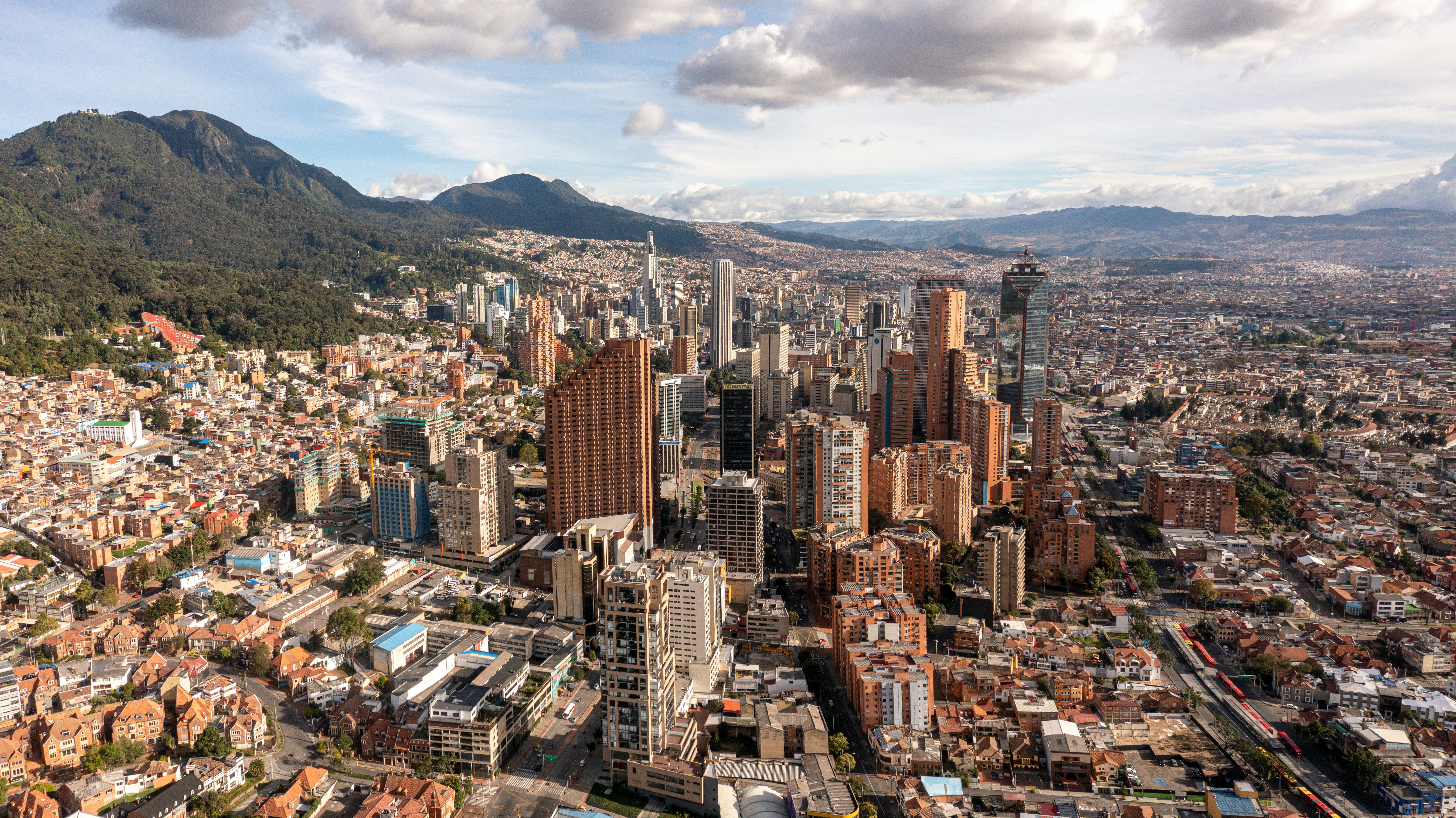
Colombia's capital is larger, cooler (it sits at 8,600 feet above sea level), and more professionally oriented. Bogotá has more job opportunities, world-class restaurants and cultural institutions, and a different energy to Medellín — more urban, less resort-town. Rents are broadly similar to Medellín, though the weather is significantly colder and more variable.
Cartagena — Beach and History
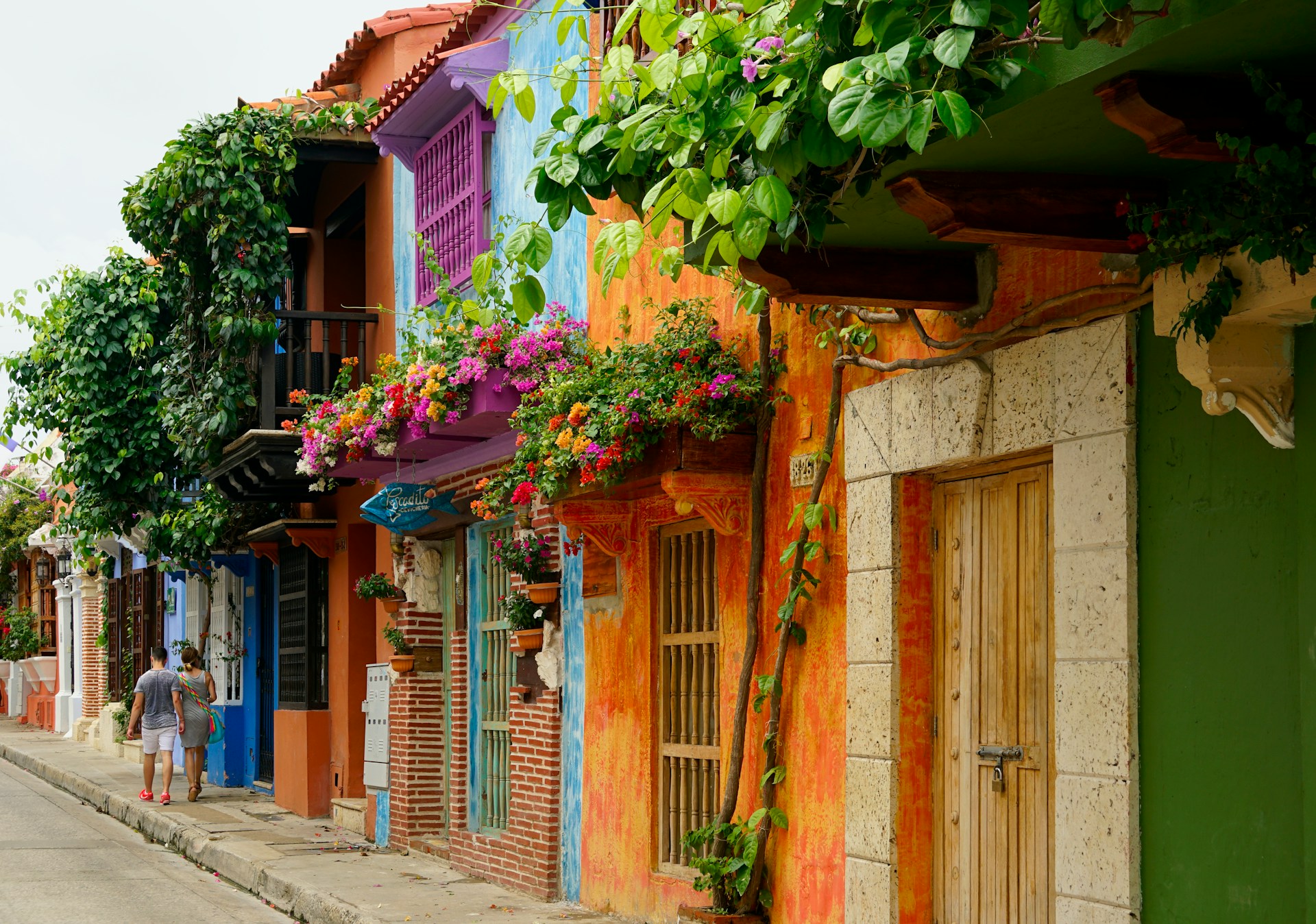
Cartagena appeals to retirees and those who want to live near the Caribbean coast. The colonial architecture is stunning, the beaches are beautiful, and the lifestyle is relaxed. It is hotter and more humid than Medellín, and more expensive in tourist-facing areas. The expat community is smaller but growing.
Step 3: Understand the Cost of Living
This is where Colombia becomes genuinely exciting for Americans. According to Numbeo's April 2026 data, the average cost of living in Colombia is 65% lower than in the United States.
Here is what a comfortable monthly budget actually looks like in Medellín:
Expense | Monthly Cost (USD) |
|---|---|
One-bedroom apartment (Laureles/Envigado) | $500–$700 |
Groceries | $150–$250 |
Eating out (3–4 times per week) | $150–$200 |
Private health insurance | $80–$150 |
Gym membership | $25–$40 |
Internet (fibre) | $20–$30 |
Transport (Uber/Metro) | $40–$80 |
Mobile phone plan | $15–$25 |
Total | $980–$1,475 |
A single person can live comfortably in Medellín for $1,200–$1,500 per month. A couple can live very well for $2,000–$2,500. This includes going out regularly, travelling within Colombia on weekends, and saving money.
Step 4: Sort Out Healthcare
Colombia's private healthcare system is widely regarded as one of the best in Latin America — and for Americans, the cost is almost shockingly affordable.
A private doctor's consultation typically costs $30–$60 USD. Specialist appointments run $50–$100. Most major private hospitals in Medellín and Bogotá are modern, well-equipped, and staffed by internationally trained doctors, many of whom speak English.
Most visa categories require you to have private health insurance. Fortunately, comprehensive all-risk coverage typically costs $80–$150 per month for a healthy adult under 60 — a fraction of what Americans pay in the US.
Once you have formal residency status, you can also enrol in Colombia's public healthcare system (EPS), which provides comprehensive coverage at very low cost, though with longer wait times for non-urgent care.
Step 5: Open a Bank Account
s a foreign national in Colombia is manageable but requires some patience. Not all banks are equally foreigner-friendly, and some will require you to have a Cédula de Extranjería (Colombian foreign ID card) before they will open an account.
The most practical approach for new arrivals:
Use Wise or a similar international account for your first few months — it works in Colombia, allows you to send and receive money in USD and COP, and does not require local documentation.
Once your visa is approved, apply for a Cédula de Extranjería at Migración Colombia. This typically takes 4–6 weeks.
With your Cédula in hand, open a local account with Bancolombia (the largest and most expat-friendly bank) or set up a Nequi digital account (Bancolombia's app-based option, which is faster and requires less paperwork).
Step 6: Find Housing
The Colombian rental market works differently to the US. Most landlords require:
A local guarantor (fiador) — a Colombian citizen who co-signs your lease
A deposit of one to two months' rent
Proof of income
As a foreigner without a local guarantor, you have a few options. You can stay in a furnished short-term rental while you establish yourself and build local connections. You can offer a larger deposit (three to six months) in lieu of a guarantor. Or you can use a relocation service — like Casa Nueva Co. — that has established relationships with landlords who regularly rent to international tenants.
Useful platforms for property search:
Metrocuadrado — Colombia's main real estate platform
Fincaraiz — good for Antioquia/Medellín region
Facebook groups — "Expats in Medellín," "Apartamentos en Arriendo El Poblado"
Step 7: Learn Some Spanish
You do not need to be fluent in Spanish to live in Colombia, particularly in the expat-heavy neighbourhoods of El Poblado and Laureles where English is widely spoken. However, basic Spanish will significantly improve your experience — and the warmth with which Colombians receive you when you make an effort is remarkable.
Recommended resources:
Duolingo or Babbel for vocabulary basics before you arrive
iTalki for one-on-one lessons with a Colombian tutor
Language exchanges in Medellín and Bogotá are free and happen weekly in most major expat areas
Step 8: Understand Safety — the Real Picture
Safety in Colombia is genuinely nuanced, and it is one of the questions Americans ask most often. The honest answer is: in the expat neighbourhoods of major cities, day-to-day life is safe and comfortable. Violent crime in El Poblado, Laureles, or the main expat areas of Bogotá rarely affects foreign residents who exercise normal urban awareness.
The challenges you are more likely to encounter are petty theft (keep your phone in your pocket, not on the table at a café) and scams targeting obvious tourists. Both are manageable with common sense.
Colombia's safety situation has improved dramatically over the past 20 years. Medellín in particular has undergone a transformation that has been studied by urban planners worldwide. That said, it is not a uniformly safe country — avoid certain areas, take Uber rather than hailing street taxis, and connect with the local expat community who can give you current, specific guidance when you arrive.
Common Mistakes Americans Make When Moving to Colombia
1. Not sorting the visa before arriving Too many Americans arrive on a tourist visa with a vague plan to "figure it out later." The Digital Nomad Visa requires documents that take time to gather — FBI background checks with apostille alone can take 6–8 weeks. Start the process before you board the plane.
2. Choosing housing before seeing it in person Photos in Colombian rental listings are often misleading. Never sign a lease without visiting the property — or having someone you trust inspect it on your behalf.
3. Not understanding the tax implications If you spend more than 183 days in Colombia in a calendar year, you become a Colombian tax resident, which may affect your obligations to both Colombia and the US. Speak to a cross-border tax advisor before you move.
4. Moving to the wrong city for their lifestyle Medellín is not for everyone, and neither is Bogotá. Do a scouting trip first — spend one to two weeks experiencing each city you are considering before committing.
5. Doing everything alone The Colombian bureaucratic system is navigable but complex. Having a trusted local contact — or a professional relocation service — makes an enormous difference in how smoothly everything goes.
How Casa Nueva Co. Can Help
Navigating all of the above on your own is possible — but it takes time, carries risk, and can be genuinely stressful. We built Casa Nueva Co. to be the trusted guide that most people moving to Colombia wish they had found sooner.
We are based on the ground in Rionegro, Antioquia. We have done this ourselves. We work with a handpicked network of licensed Colombian immigration lawyers, housing agents, and insurance brokers. And we have helped Americans at every stage — from the first curious conversation to arriving in their new apartment.
Our services range from a simple Discovery Package (ideal if you are still in the research phase) to full end-to-end Concierge Relocation support that handles every detail of your move.
Your first conversation with us is completely free.
Book a Free Consultation with Casa Nueva Co.
Frequently Asked Questions
Can Americans buy property in Colombia? Yes. Foreigners have the same property rights as Colombian citizens and can freely purchase real estate. An investment of approximately $115,000 USD in property may also qualify you for an investment-based visa.
Do I need to give up my US citizenship? No. Colombia allows dual citizenship and there is no requirement to renounce your US citizenship at any stage of the residency or naturalisation process.
How long until I can get permanent residency? After five continuous years of legal residency in Colombia (on a qualifying visa), you can apply for permanent residency (Visa R).
Is Colombia good for families with children? Yes, particularly in Medellín and Bogotá, which have a growing number of international schools offering IB, American, and British curricula. Annual tuition ranges from approximately $7,500 to $15,000 USD.
What is the time zone in Colombia? Colombia operates on UTC-5 year-round and does not observe daylight saving time. This makes it well-aligned with US East Coast business hours and easy for remote workers serving American clients.
This guide is for informational purposes only and does not constitute legal or immigration advice. Visa requirements and costs may change — always verify current requirements with a licensed Colombian immigration attorney before applying. Casa Nueva Co. works in partnership with licensed immigration lawyers; we do not provide legal advice directly.
About Casa Nueva Co. Casa Nueva Co. is a Colombia relocation service for Americans, founded and based on the ground in Rionegro, Antioquia. We guide Americans through every step of moving to Colombia — from the first question to the first morning in your new home. Start with a free consultation.